Writing for Convergent Media | Fall 2025 Cohort Work
Curated by AML, Adjunct Assistant Professor @ Pace University Communications & Media Studies | amauzy@pace.edu
(Fall 2025 CMS 228 Writing for Convergent Technology Syllabus)
This course is about learning to write well and practicing the fundamentals of storytelling that can be adopted across the ever-expanding range of creative mediums that students of media studies want to pursue. “Storytelling” is a word I now cringe a little internally at, despite deploying it so often, but more so following the descriptor’s rise in usage via LinkedIn corporate job duties. Please wade with me through the marketing jargon. My students this semester explored why and what we want to create, how to “tell stories”, and write and think for ourselves. While adapting to changing technology, we persevered through the numbing allure of generative AI slop and examined the rapid circulation of misinformation in our field. We read, watched, and listened. This cohort wrote (a lot) and workshopped together, from reported press releases to opinion essays and blogs, and practiced pitching their own work. Over the course of the semester, each student is tasked with producing a final multimedia project, self-directing a topic and outlet that resonates most with them. The final project process includes an ideation phase and proposal, a peer workshop session, and a final presentation before submitting the completed work.
Here’s what a few students made this term:
Through photos and interviews with young New Yorkers, Lucy offered an honest antidote to a media landscape dominated by weight loss drug advertisements and “Instagram face.”
Charlotte developed a web resource to educate about the impacts of fast fashion on the environment, consumers, and culture.
Hera recorded a podcast episode about labor tensions in the WNBA, reporting on the media landscape of women’s sports and visions for a more equal future.
Olyvia produced a satirical talk show segment, tackling the Trump administration’s demolition of the East Wing, and blending humor with historical research and reporting.
Lauren created a campaign and social media strategy to raise awareness of and advocate for Ryder’s Law, a bill that would end the horse drawn cab industry.
Sophia created a video podcast about the modern revival of “sad girl aesthetic” and the complications of romanticizing mental health conditions.
Lily directed a new media initiative on the mental health pressures college athletes face.
Ceci published a website that functions as a welcoming and warm space for creative storytelling and community, featuring blogs, her podcast, and a refuge from the harsher corners of the internet.
Michael recorded a video podcast about an entertainment industry shift to shorter TV shows and calling for investment in long-form content.
As an extension of our class’ PSA assignment on the theme of water (more on that below), Tamara created a video documentary exploring NYC as an island and a call to notice and care for Mannahatta’s natural history.
Other students explored topics like TikTok’s encouragement of overconsumption and micro-trends, examining Pace as a predominantly white institution in NYC, review of aliases in the music industry, stories of immigration, video journalism on disinformation, and influencer satire.
Islands, Archipelagos, and Cultural Ecologies Course Integrated Project: Creating Public Service Announcements for Water
We also engaged with a special project this semester and created a series of PSA posters on the theme of “Water.” Water has shaped New York City as it exists today. We live in a city of around 40 connected “islands.” Although our university is steps away from a waterfront, we are more often advertising our urban built environment, and not the natural one we inherited. So when Pace announced a new initiative developing “an institutional identity for Pace’s lower Manhattan location as an island campus,” I was thrilled to give my class of writers and creators space to explore what it means to live surrounded by water.
In addition to teaching media writing as an adjunct at my alma mater, I direct communications at the Design Trust for Public Space, a nonprofit dedicated to unlocking the potential of NYC’s public spaces through design. Every few years, my organization opens a public call for project ideas centered on a pressing theme or critical issue the city faces. Grounded by extensive community outreach and engagement, we work with finalists to turn their ideas into tangible public space projects, connecting city agencies, funders, and design experts to make their visions a reality. This past year, we announced our 12th open Request for Proposals on the theme of “Water: Designing an Equitable Water Future for NYC.” As 2025 was punctuated by record-breaking heavy rain events paired with record-breaking heat waves, this theme is a timely call to action to rethink how we manage too much or too little water, but to also celebrate the resource that defines culture, play, and sustenance across the five boroughs. The future of the city’s public life depends on shifting our relationship with water in all its various forms–rain, oceans, rivers–and the multiple ways we engage with it–construction, art, play, drinking, sewage.
With a grant from the Mellon-funded Islands, Archipelagos, and Cultural Ecologies initiative for a course integrated project, I asked the CMS students in my Fall 2025 Writing for Convergent Technology class to write about water in the style of public service announcement campaign posters, framing NYC as a city of islands. As e-flux architecture puts it, PSAs “borrow private networks for the purposes of public pedagogy,” and offer a fitting venue for articulating big ideas to a wide audience about resources, and as emerging communications professionals, practicing writing powerfully and persuasively, but also simply as succinctly. Students could choose to adopt an existing organization/cause or create their campaign as a resident of NYC.
To help widen our perspective and inform our approach to the assignment, we had two incredible guest speakers visit our class: Shanna Blanchard of F.Y. Eye’s PSA Network & the Water Safety Coalition, and Sabina Sethi Unni, MSUP, creator of the hit public realm comedy/ flooding educational tool Flood Sensor Aunty. Their approach to storytelling and community left the class with many ideas for their projects and a list of new waterfronts to explore. We read stories about water in the city, from excerpts of Eric Sanderson’s Mannahatta project to photojournalism on the People’s Beach at Jacob Riis Park. We watched Daphne Lundi of Urban Ocean Lab speak at the Whitney for the launch of Design Trust’s Water RFP, asking the audience, “How do New Yorkers use water to sustain their culture?,” and “How do we make the infrastructure of water more visible?,” alongside a panel featuring the NYC Department of Environmental Protection in conversation with a multimedia visual artist during Climate Week. We looked at the nonprofit and government-designed PSAs that decorate our commutes and pop-up on every street corner via Link NYC hubs, analyzed what we liked visually, how we absorbed the information, and the characteristics of a “good” PSA. We acknowledged NYC’s history as a global port, while challenging our existing perception of the five boroughs as predominantly urban, exploring Sanderson’s count of 55 different ecosystem types that make up our home.
As a result, this cohort created a gallery of visual messages about what water means to them, hopefully inviting the Pace community to think differently about how we live with the water all around us. We are excited to display this work at a university exhibition in April 2026:
PSA GALLERY: WATER
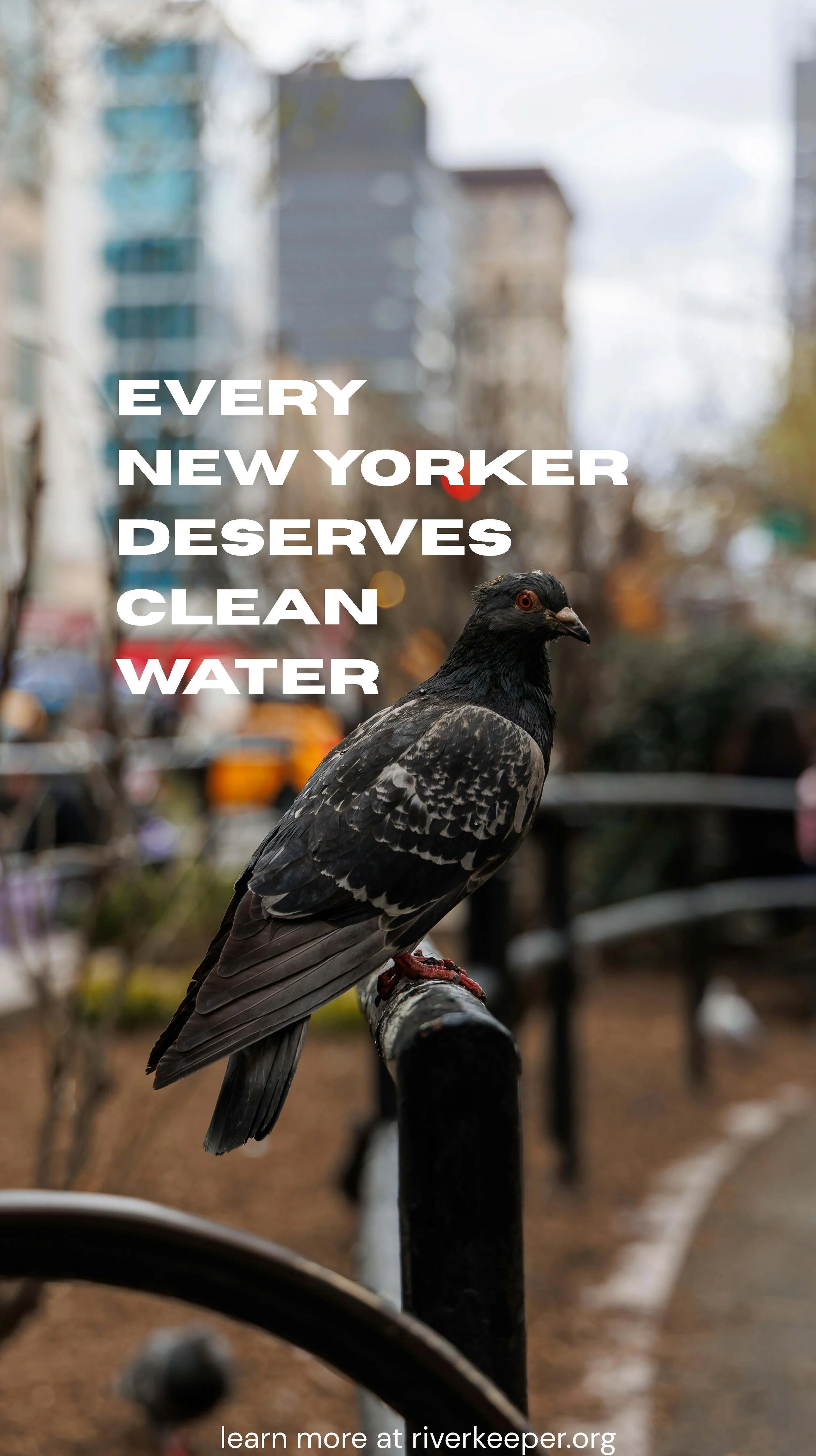
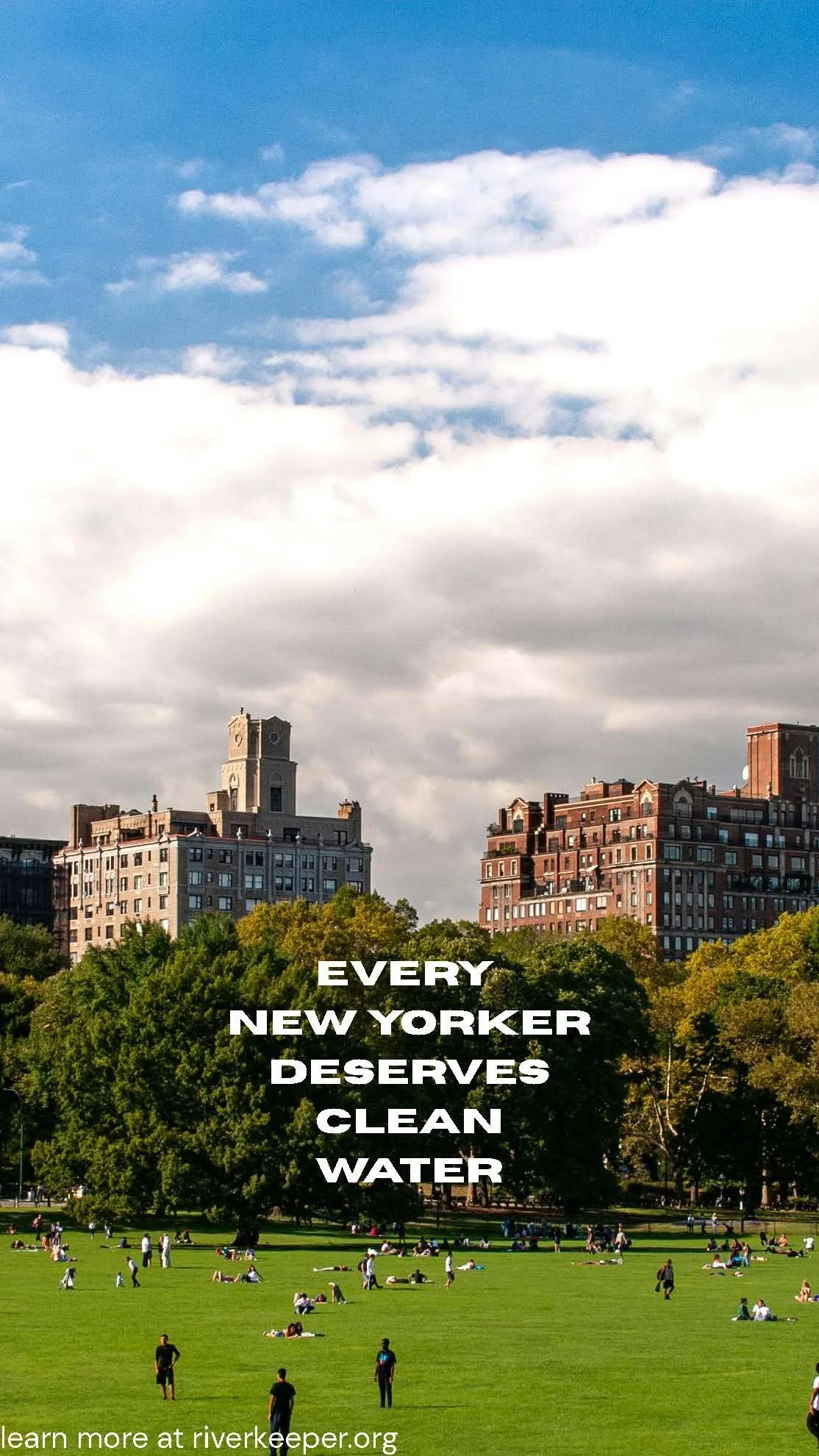
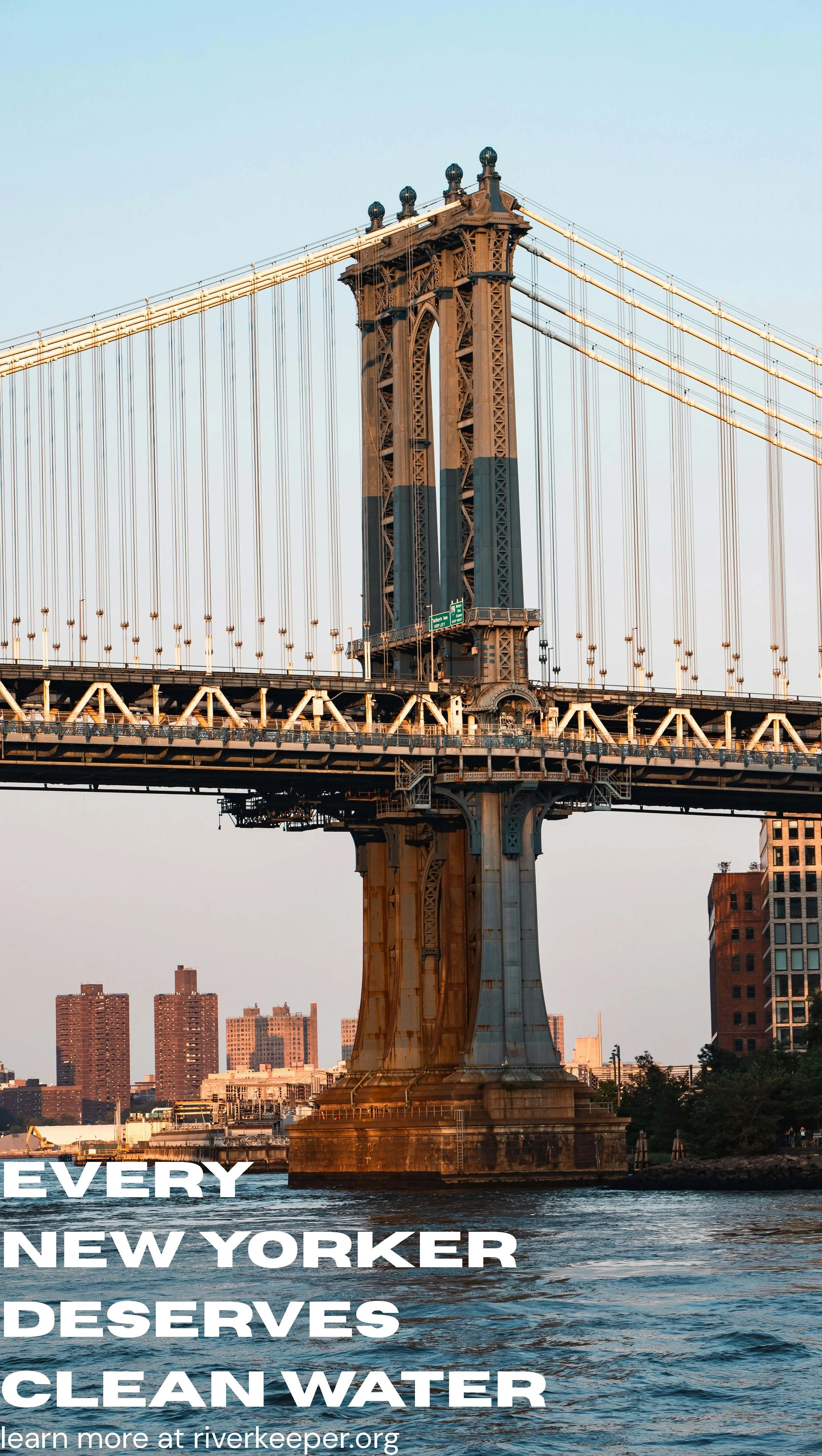
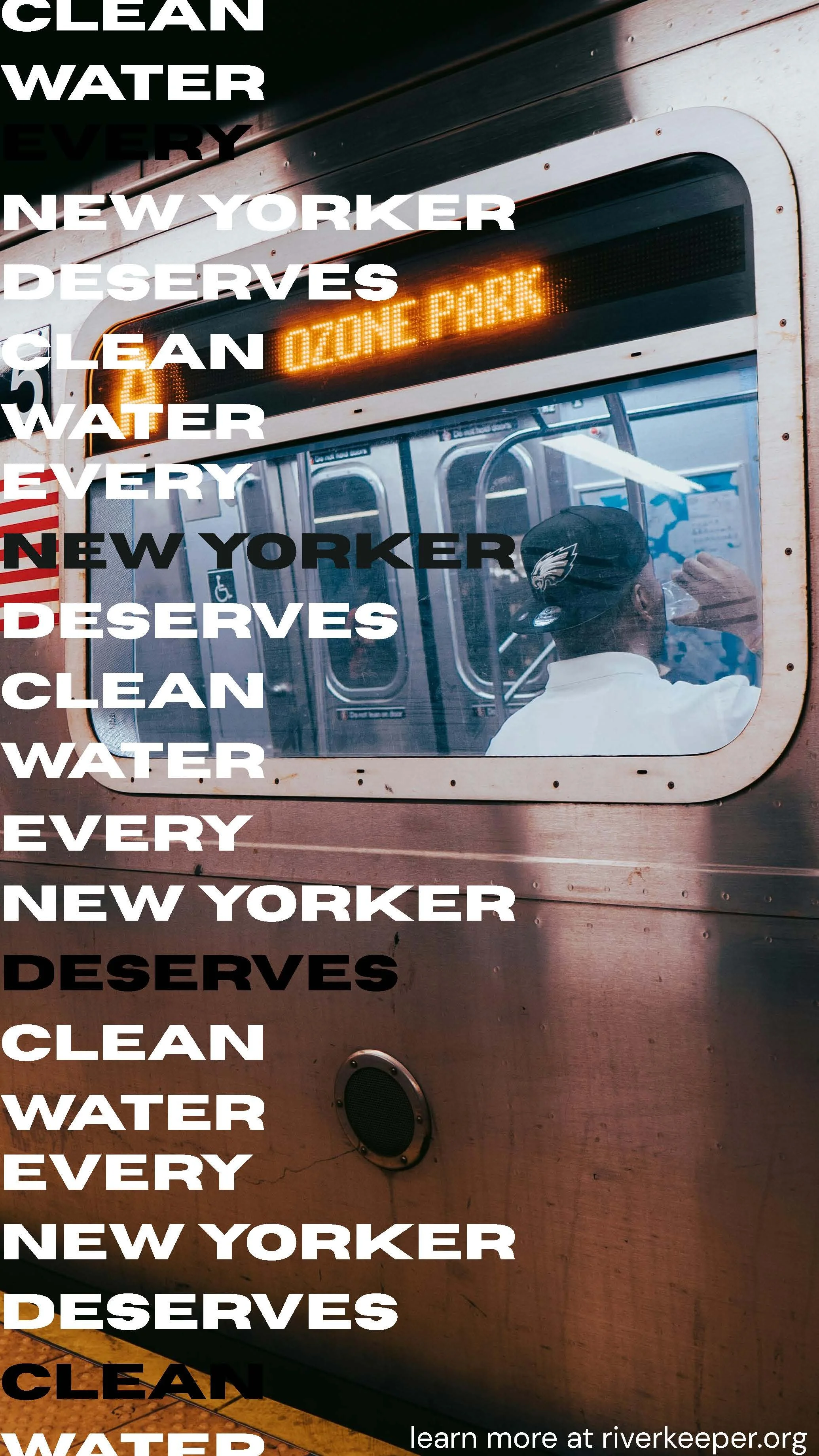
Lucy Anderson | Every New Yorker Deserves Clean Water: “In New York City, few things are clean. Surfaces, streets, and subways all have a layer of grime that is considered to be a part of New York City's endless charm. The squirrels, the pigeons, the rats, and even the roaches all add a certain peculiar energy that only New York can boast as uniquely its own. Amidst all this grime, it can be hard to imagine that anything in New York is clean, but our water. Every New Yorker, big and small, deserves clean water running through clean pipes. What is the point in boasting about how clean our water is if we are forgetting about those who can't access it? Why water? We all need it, every one of us.”
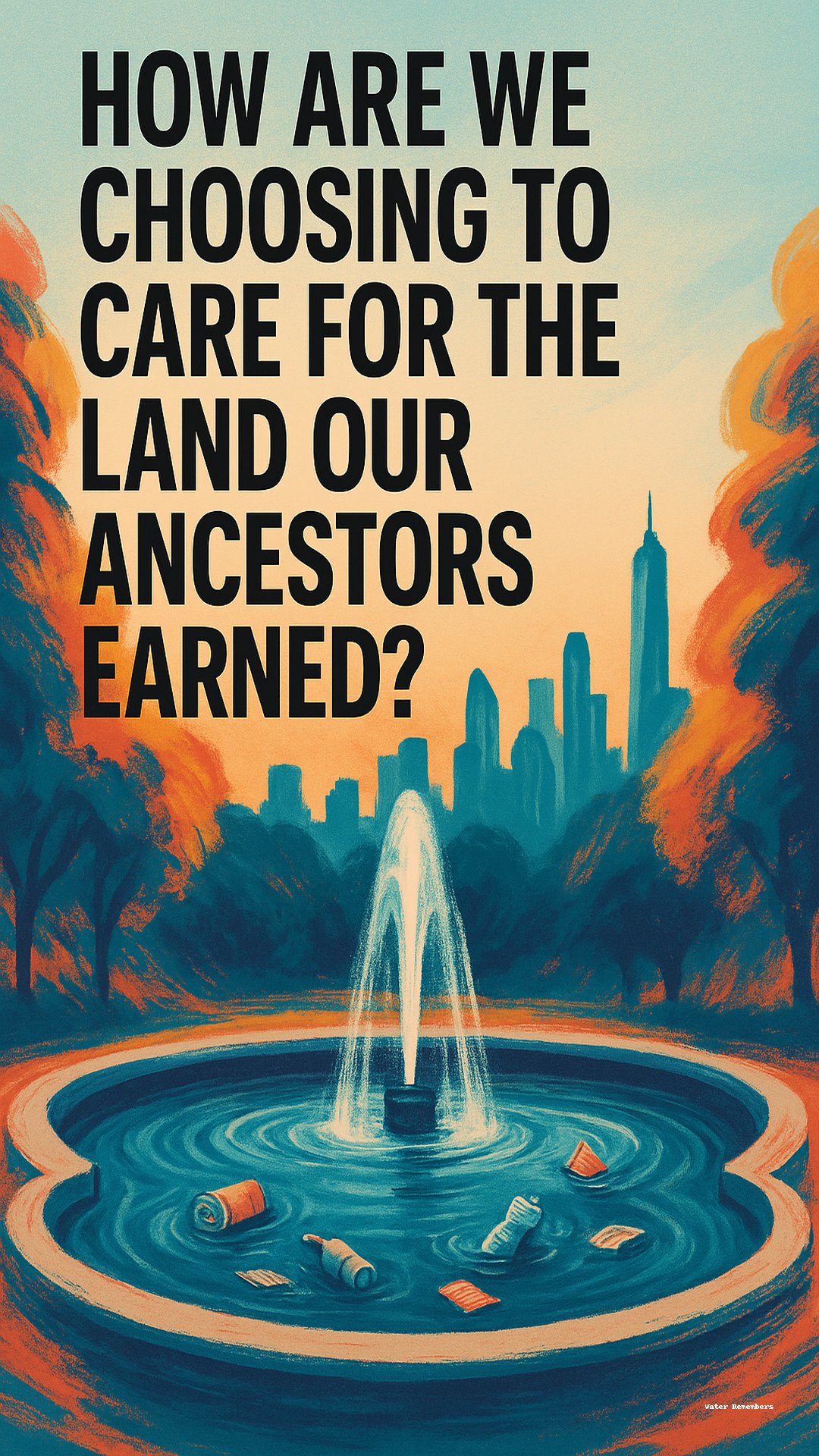
Tamara Frieson | Water Remembers: Memory, Culture, and the Island of Mannahatta: “Water functions as both a vessel of memory and a keeper of cultural history. Beginning with the Lenape people’s relationship to the land now called Manhattan, the PSA reflects on how water once shaped the island’s ecology and continues to hold symbolic meaning in modern urban life, from fountains to rainfall. Using a blend of narration, archival imagery, and quotes from literary figures like Toni Morrison and Virginia Woolf, the PSA will invite viewers to rethink their relationship to water, not merely as a natural resource, but as a living archive that remembers what came before. Morrison’s belief that “all water has a perfect memory” will serve as a guiding thread, linking environmental awareness to the idea of remembrance and return. Ultimately, this project bridges journalism, creative media, and cultural critique to reimagine environmental storytelling as an act of reverence rather than warning. The seven- to ten-minute PSA will combine original footage of Manhattan’s public water sites with layered sound design and poetic narration, aiming for a tone that is both meditative and informative. Designed for audiences interested in sustainability, Indigenous history, and art, the piece will emphasize how storytelling can awaken environmental consciousness through emotion and beauty. By showing water as a witness to both loss and continuity, the PSA hopes to inspire New Yorkers to see their city, and themselves, as part of an ongoing story shaped by memory, land, and flow.”
* In addition to the PSA poster assignment, Tamara also themed her final project for the class as a longer video PSA that extended her campaign on connecting with New York’s natural history. “
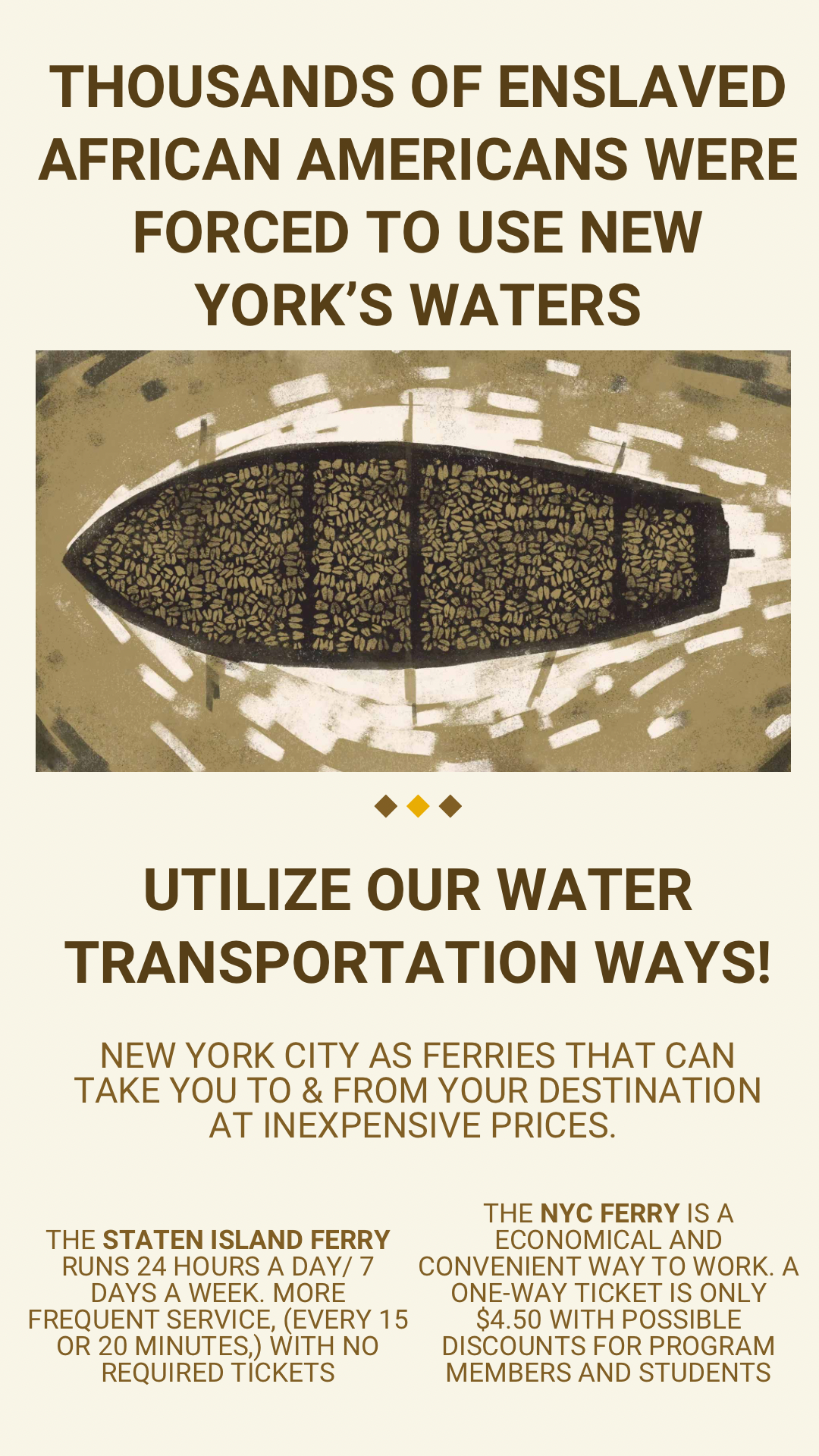
Morgan Stanislaus | They Were Forced To Use Water, You Aren't: “With this PSA, I wanted to connect the water surrounding New York City and the historical and cultural significance of water for New York and its people. I did this by highlighting the slave trade and how, according to slaveryinneewyork.org "As many as 20 percent of colonial New Yorkers were enslaved Africans," and thousands were forced here on boats to New York. I wanted my PSA to show people that there were people forced to use these boats for transportations, stolen from their homes, but New Yorkers have free and/or affordable options to use the ferry or boats for travel. By contrasting the history of Africans being transported on water to the United States with the fact that many people don't know about the Staten Island ferry being completely free of charge or that the NYC ferry that can take people to and from the five boroughs is $4.90 for a one-way ticket. The goal of my PSA is to show that we have water around us, don't refer to NYC as an island or peninsula and don't treat it as such. The water should be used if it's here, and it's a privilege that we have the choice to when others were forced to.”
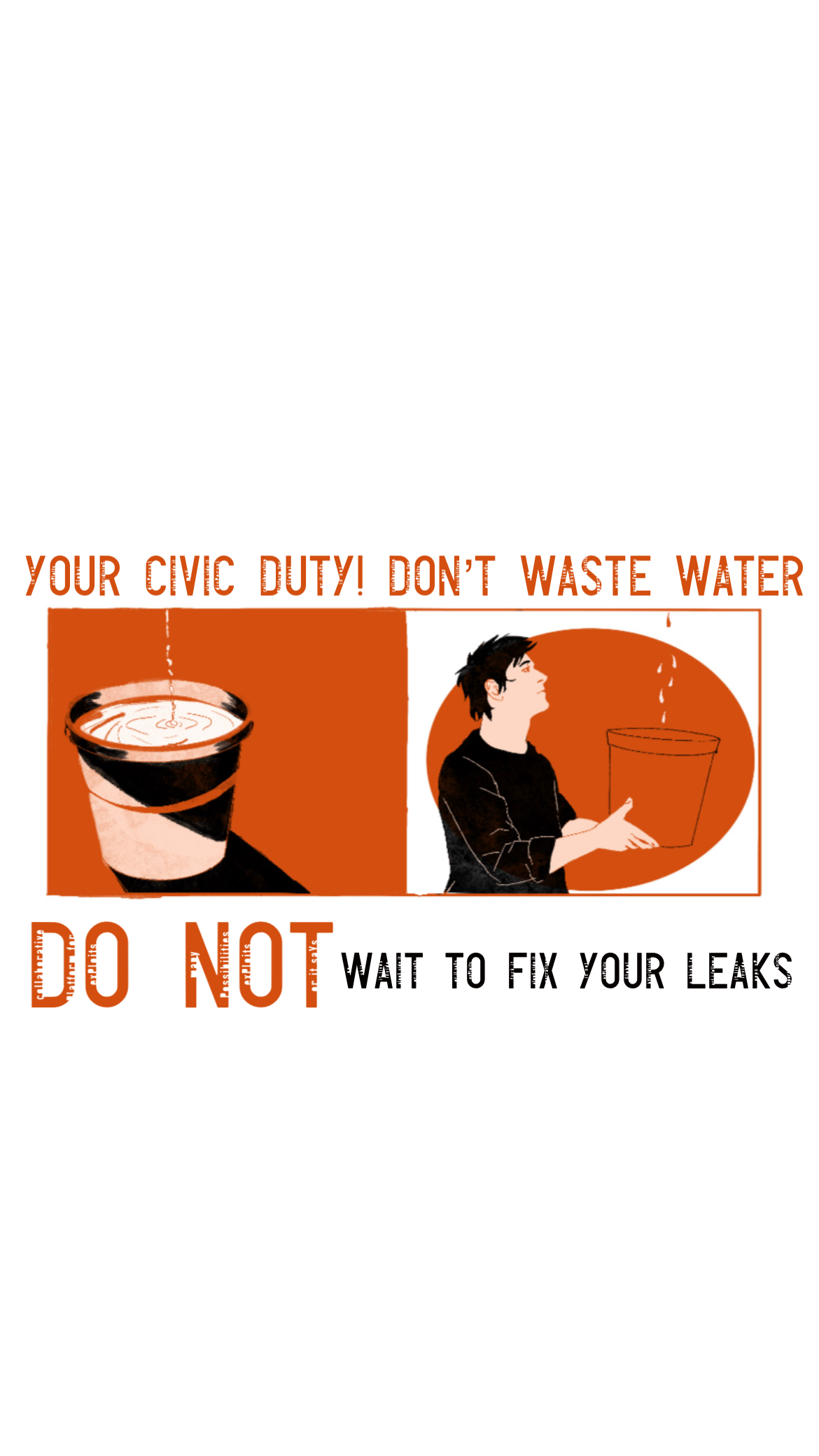
Hera Natt | Don’t Wait to Fix Your Leaks: “In 1942, Mayor LaGuardia released a campaign alongside artist Earl Kerkam, as a series of drawings designed for the subway to reduce water waste in New York City. This PSA is heavily inspired by the aforementioned series of advertisements, honing in on the issue of unresolved leakage and the water/resources it wastes. According to New York Focus, "New York City gave away or lost about 15 percent of all the water that went through its pipes — some 155 million gallons per day." This PSA aims to reduce the costs and resources that our city spends on rectifying this issue per year.”
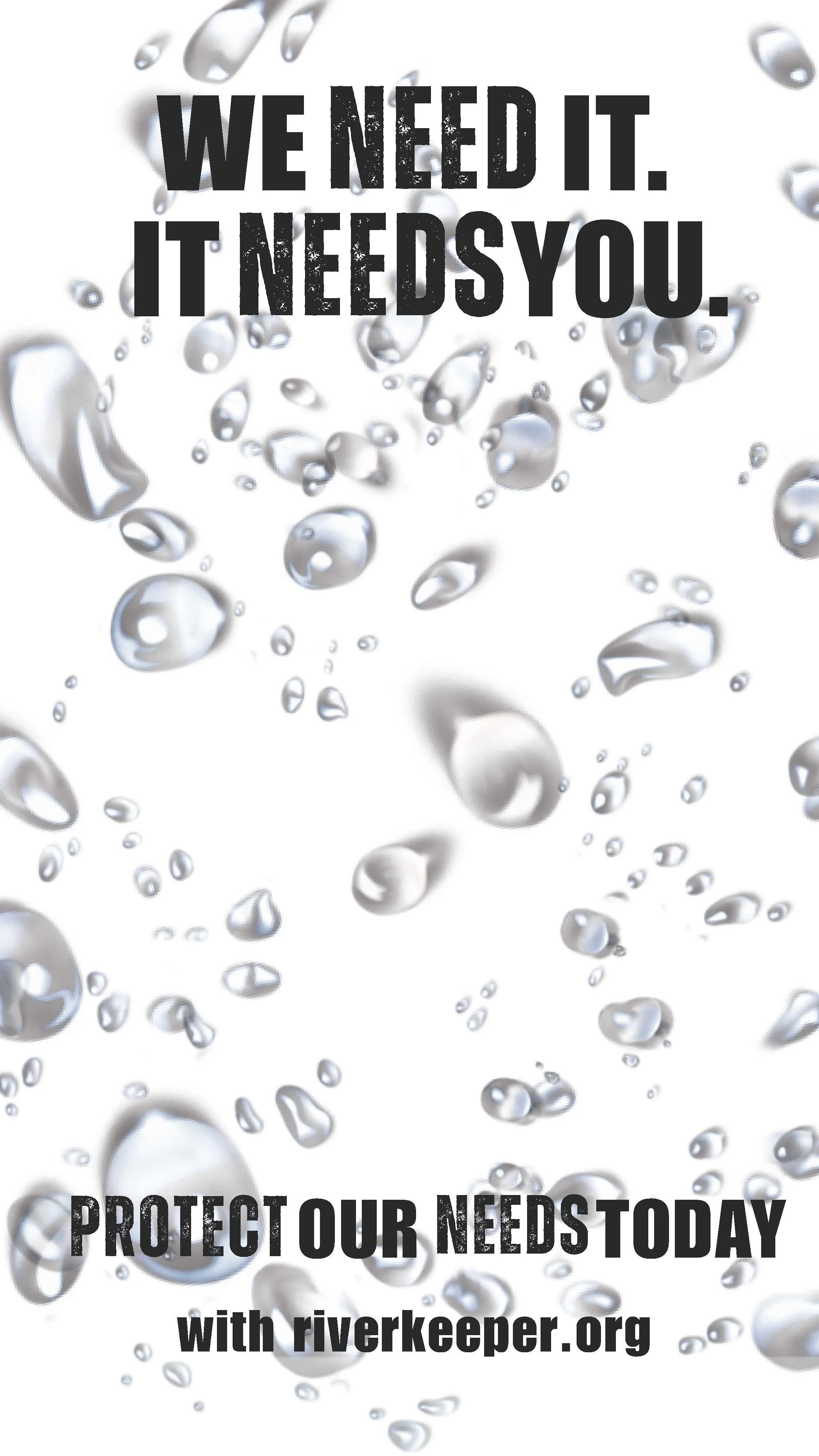
Olyvia Rose | Our Needs: “For my PSA campaign, I chose to frame it around how water plays a powerful and ever-changing role in shaping New York’s future. From flash floods to heat waves, the city’s relationship with water reflects the urgent needs and challenges of climate change. I wanted to highlight how extreme weather events are no longer distant possibilities; they are daily realities that threaten New Yorkers' homes, subways, and streets. This campaign encourages New Yorkers to take action by protecting, planning for, and preparing with water in mind. Titling my PSA 'Resilient Water. Resilient City.' I wanted to spread the community's awareness and resilience. The overall goal being to inspire collective responsibility in building a city that can adapt and thrive in the face of climate uncertainty.”
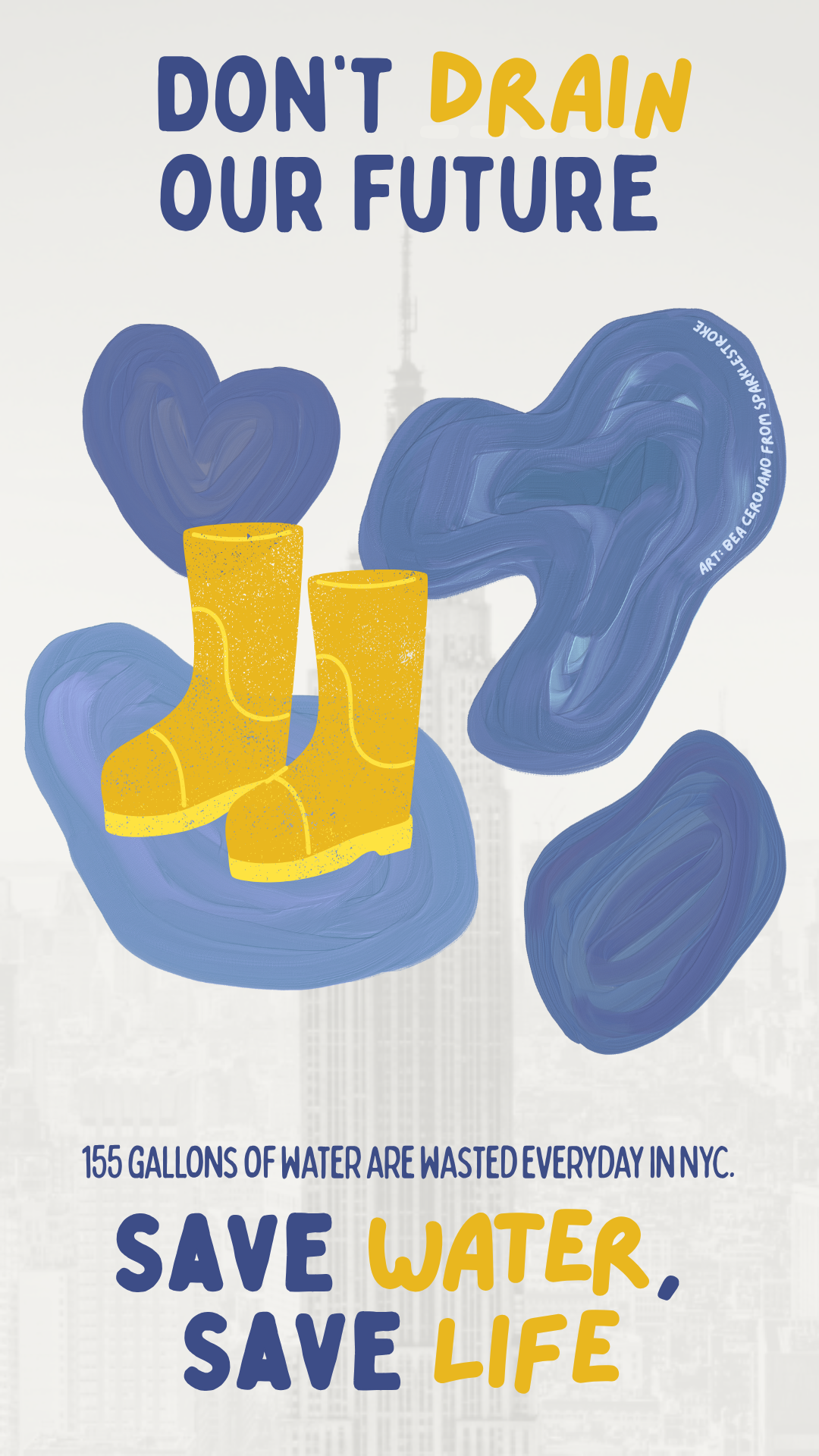
Sophia Pulia | Don't Drain our Future, Water as Life: “In the hustle and bustle of city life, water conservation is often overlooked. Yet, it is essential to sustaining New York City's future. Every day, approximately 155 million gallons of water are wasted in NYC through issues like leaky pipes to leaving faucets running while brushing teeth. This silent crisis threatens not only our resources, but the very life of the city. Water is not infinite, and our habits today will determine whether future generations will have access to this vital resource. This campaign, "Don't Drain our Future," aims to remind New Yorkers that water is life. By saving water, we are saving the heartbeat of our city.”
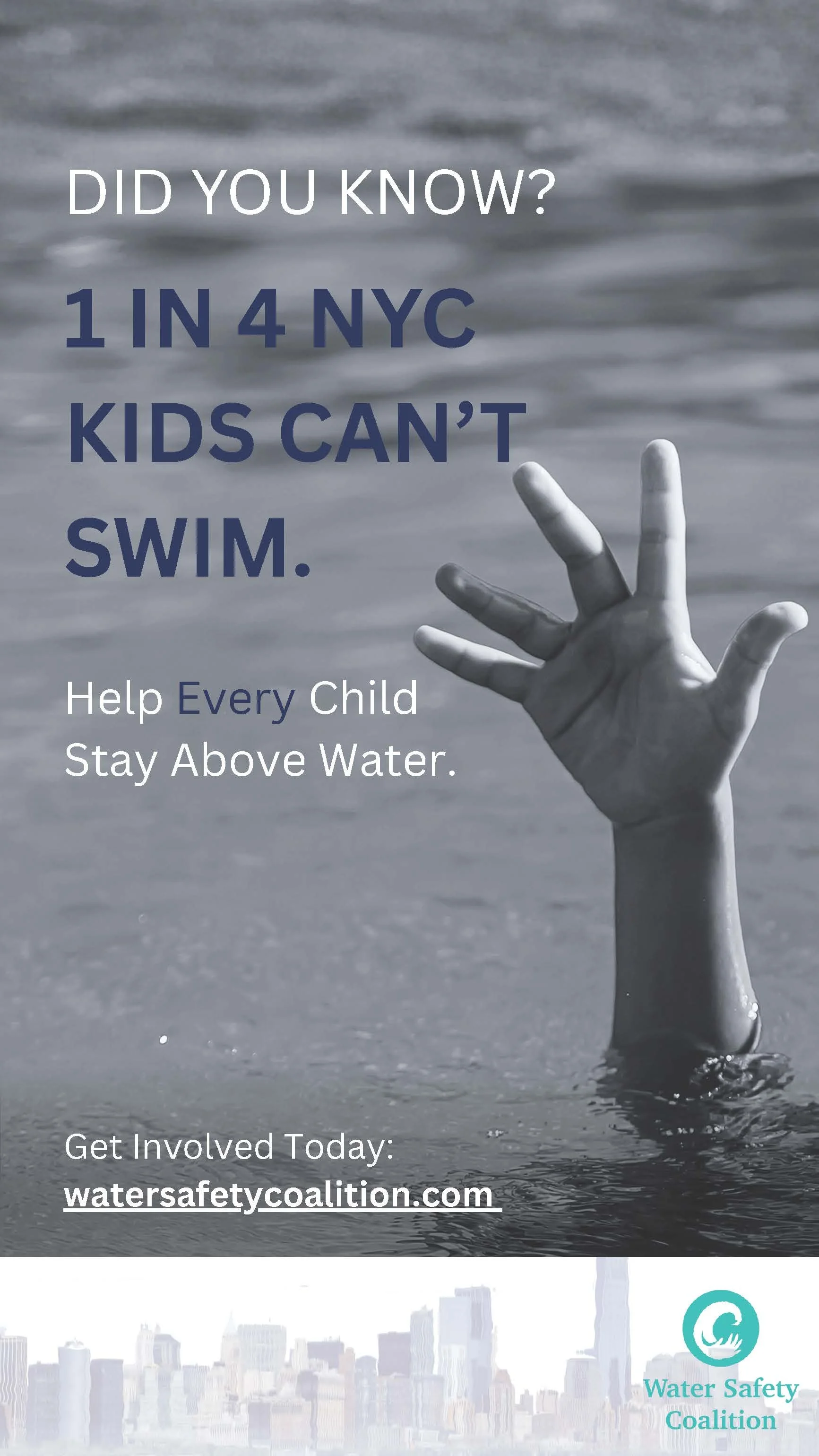
Charlotte Cunningham | Stay Above Water: NYC Kids Deserve Safe Summers: “This PSA raises awareness about a critical but often overlooked issue in New York City, the fact that one in four NYC kids cannot swim. Using the striking image of a child’s hand reaching out of the water, the campaign emphasizes the urgency of expanding access to swimming education and water-safety resources. Drowning remains one of the leading causes of accidental death for children, and in a city surrounded by water in the form of rivers, beaches, and pools, the lack of water-safety training becomes both a public-health and equity concern. The message 'Help Every Child Stay Above Water' reminds viewers that water safety is not a luxury, but a life-saving necessity. The PSA also highlights disparities in access to swim instruction, particularly affecting low-income families and communities. Many children simply do not have access to affordable lessons or safe swimming spaces. By directing viewers to the Water Safety Coalition, this campaign encourages community involvement, volunteerism, and advocacy for expanded swimming programs in schools and local recreation centers. Overall, this poster aims to spark action, motivating New Yorkers to support initiatives that ensure every child has the skills and confidence to stay safe in and around water.”
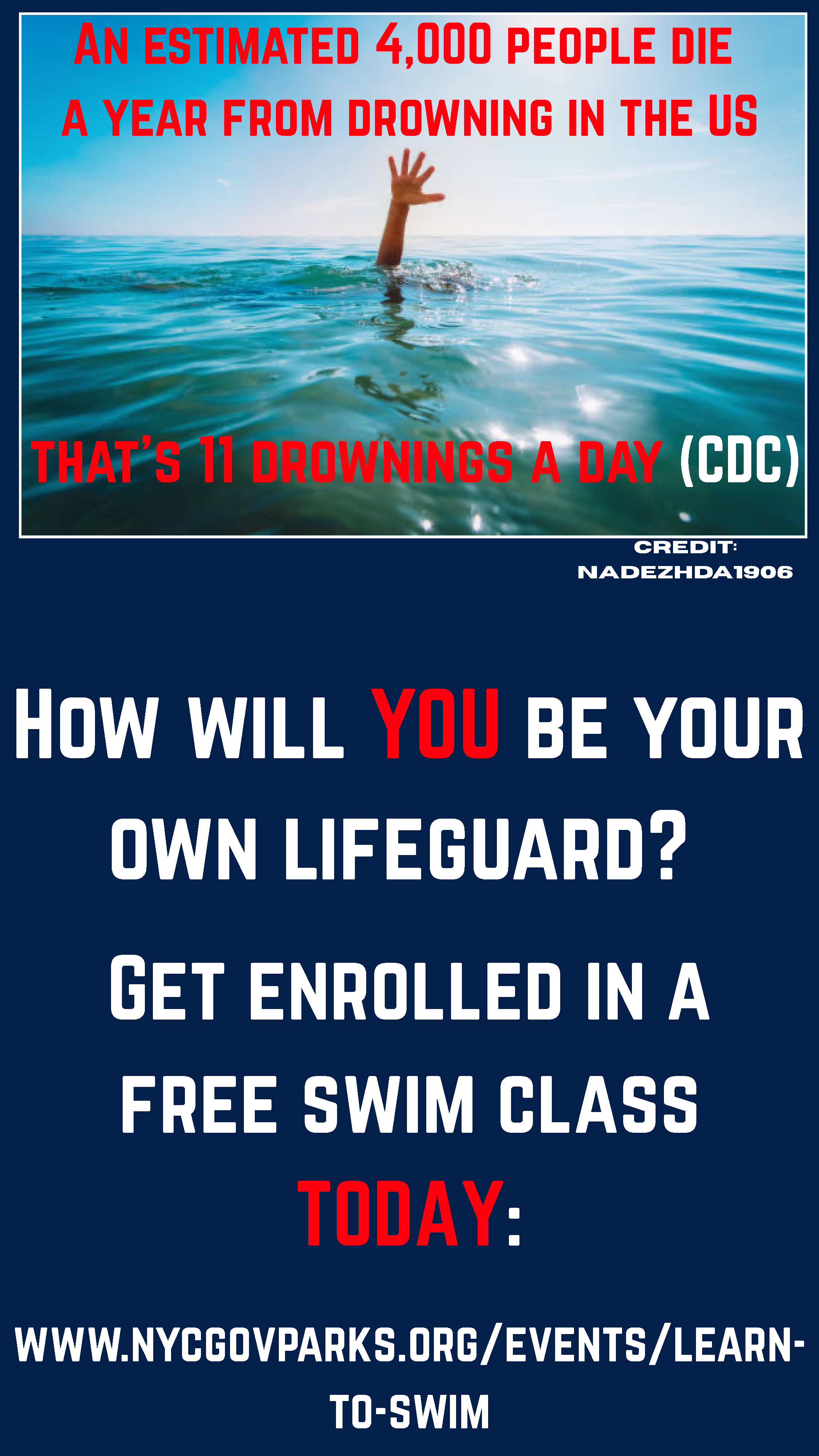
Madeline Hect | Be Your Own Lifeguard: “According to the CDC, there are an estimated 4,000 US drowning deaths a year. That's 11 deaths a day and many New Yorkers, especially children, do not know how to swim. This is an educational public service announcement that we hope will make New Yorkers and their children more proactive in taking advantage of the free swimming lessons that NYC is offering. In order for tragic drowning-related deaths to come to an end, swimming education is integral. I urge citizens of New York to combat these statistics, and sign themselves up for a swim class. The intended outcome of this PSA is to make changes in our city to help our citizens beat a preventable death.”
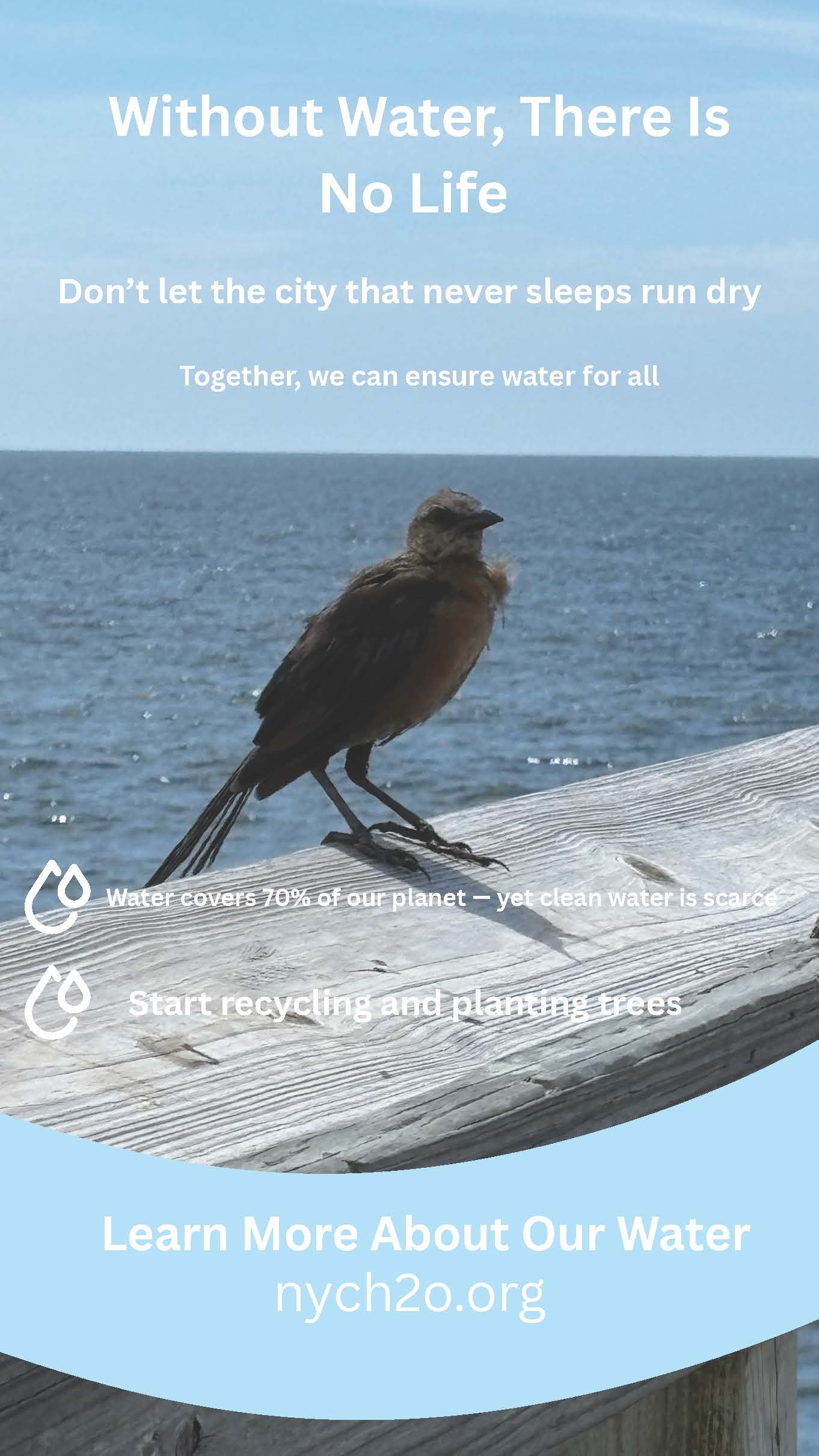
Hailey Smith | Without Water, There is No Life: Clean water is scarce and yet it covers 70% of our planet. People take for granted water, when simply we cannot exist without it. Every single living thing on this planet needs water. Water is dependent on the environment and vice versa. It supports species and it's our source of life. Without it our food supplies, and health can be threatened. So, why are we so careless with something that's so important?”
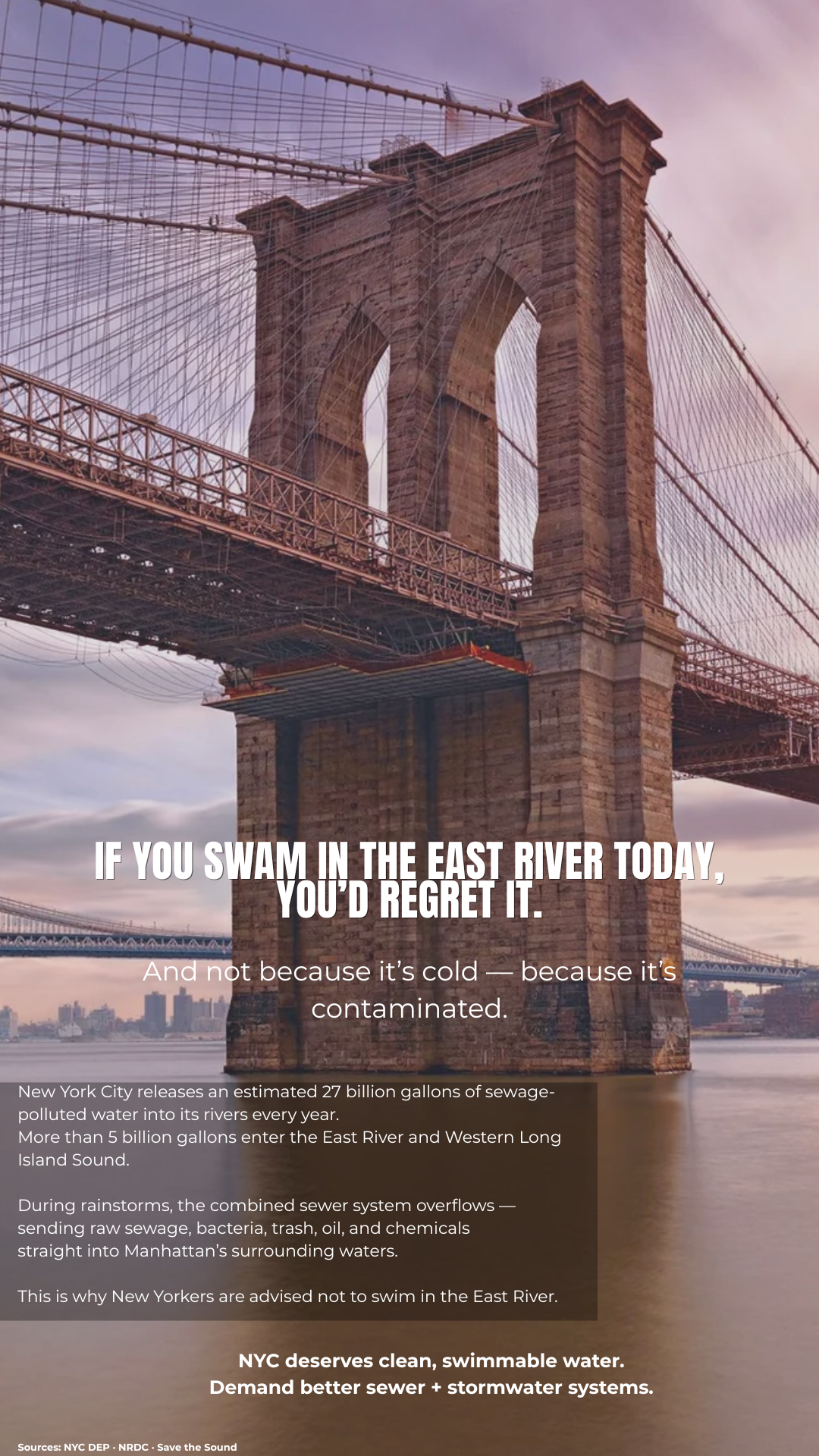
Ceci Puklus | If You Swam In The East River Today, You’d Regret It: “This PSA confronts the hidden reality of living on an island surrounded by water we can’t safely swim in. The East River, often admired for its stunning views of the Brooklyn Bridge and Manhattan skyline, conceals a disturbing truth: billions of gallons of untreated sewage and polluted runoff enter New York City’s waterways every year. My goal was to take something familiar and beautiful, a classic image of the Brooklyn Bridge in the East River, and make viewers uncomfortable when they realize what they’re really looking at. The message is both environmental and emotional. It’s about how easily we ignore the damage beneath the surface, and how the city’s relationship with water has shifted from a thriving ecosystem to a hazardous wasteland. I want people to pause, look at the water differently, and question what it means to live on an island where the surrounding ecosystem has become unsafe. This PSA is a call for awareness and accountability. To demand cleaner water systems and to remind New Yorkers that the health of this city begins at its shores.”
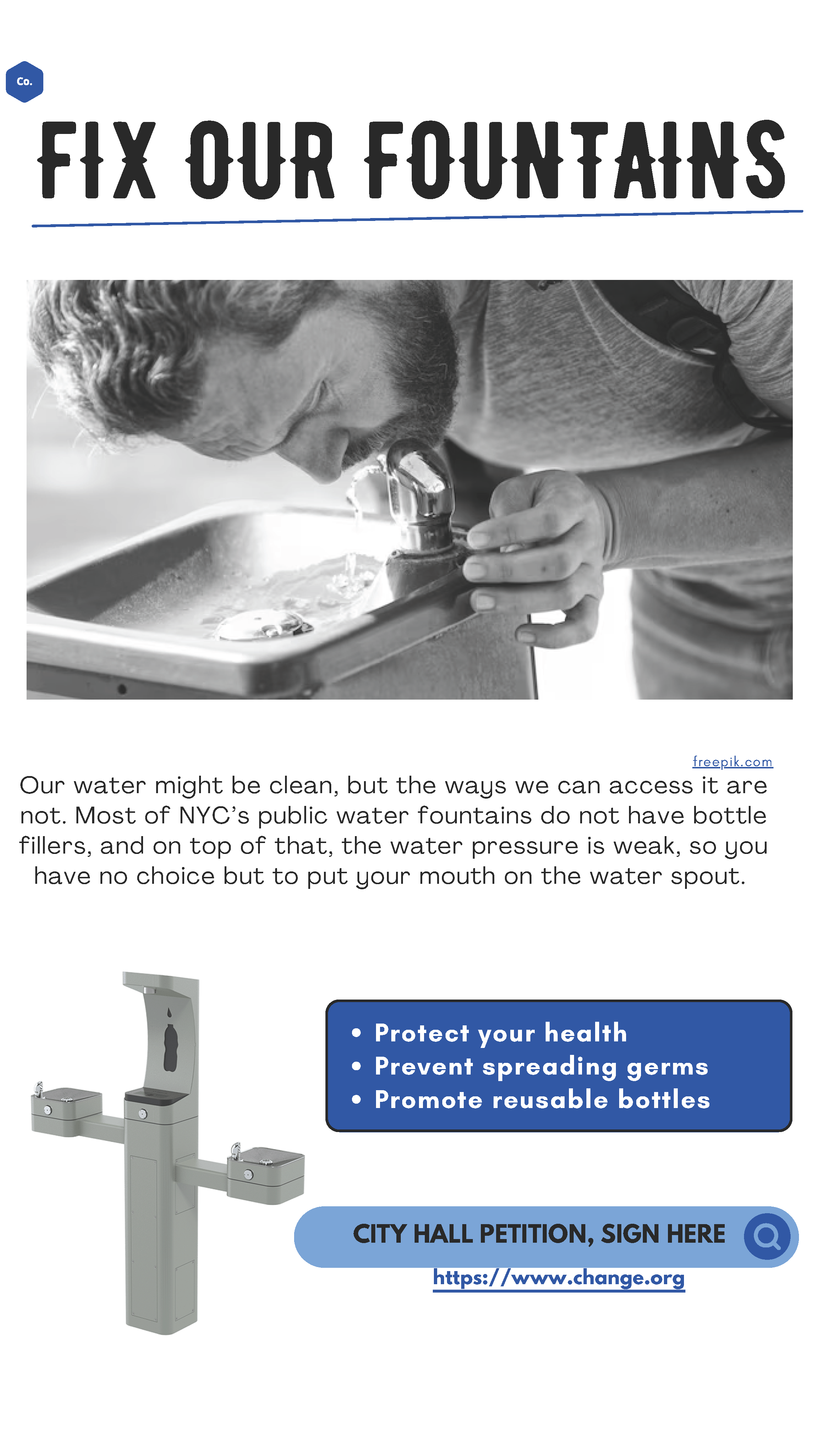
Anonymous CMS Student | Fix Our Fountains: “Water is a necessity, not a luxury. Throughout all of New York City, water fountains are outdated and unusable; some of the fountains do not have a water spout, which promotes the use of plastic water bottles. Others have little to no water pressure, forcing one to practically put their mouth on the nozzle. This is not only unsanitary but unacceptable. As a New York resident, I am appalled at the lack of care put into protecting our clean water. Our city has enough sanitation problems; we should not have to worry about spreading germs when consuming water. Prices everywhere continue to rise, and it's inhumane to expect anyone who wants to be sanitary to purchase an overpriced bottle. Protect your kids, yourself, and your community.”
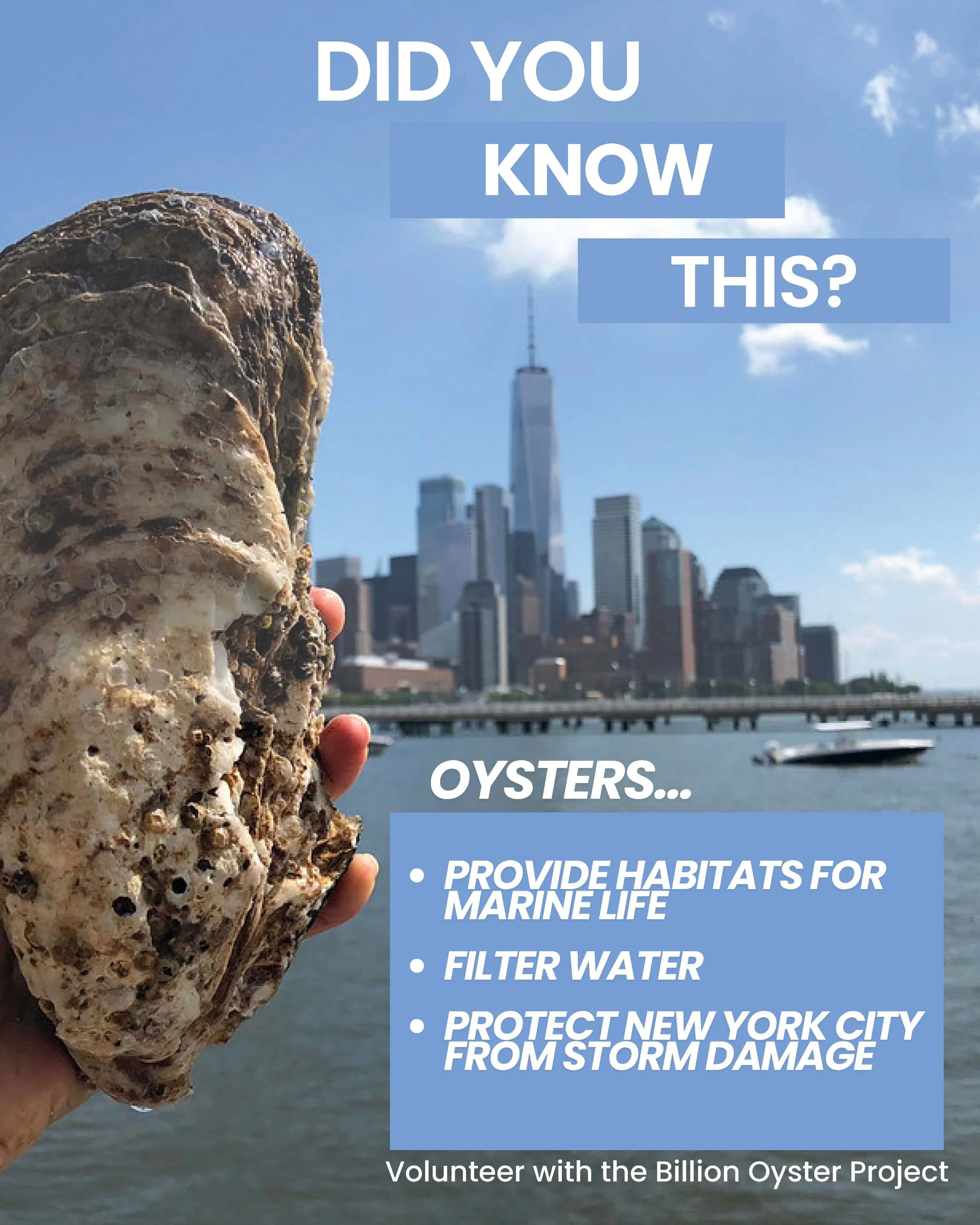
Lauren Herz | End Oyster Erasure: “My PSA campaign documents the benefits of oysters in New York City and the greater ecosystem. Their impact on the environment is too often overlooked. While it may not be common knowledge, they have an environmental purpose. To name a few, oysters improve water quality, improve biodiversity, and protect the city from storm damage. Prior to urban development, they were once very abundant in New York City. At one point in time, half of the world's oyster population inhabited the New York Harbor. Overall, the purpose of my campaign is to spread awareness and stop the erasure of oysters.”
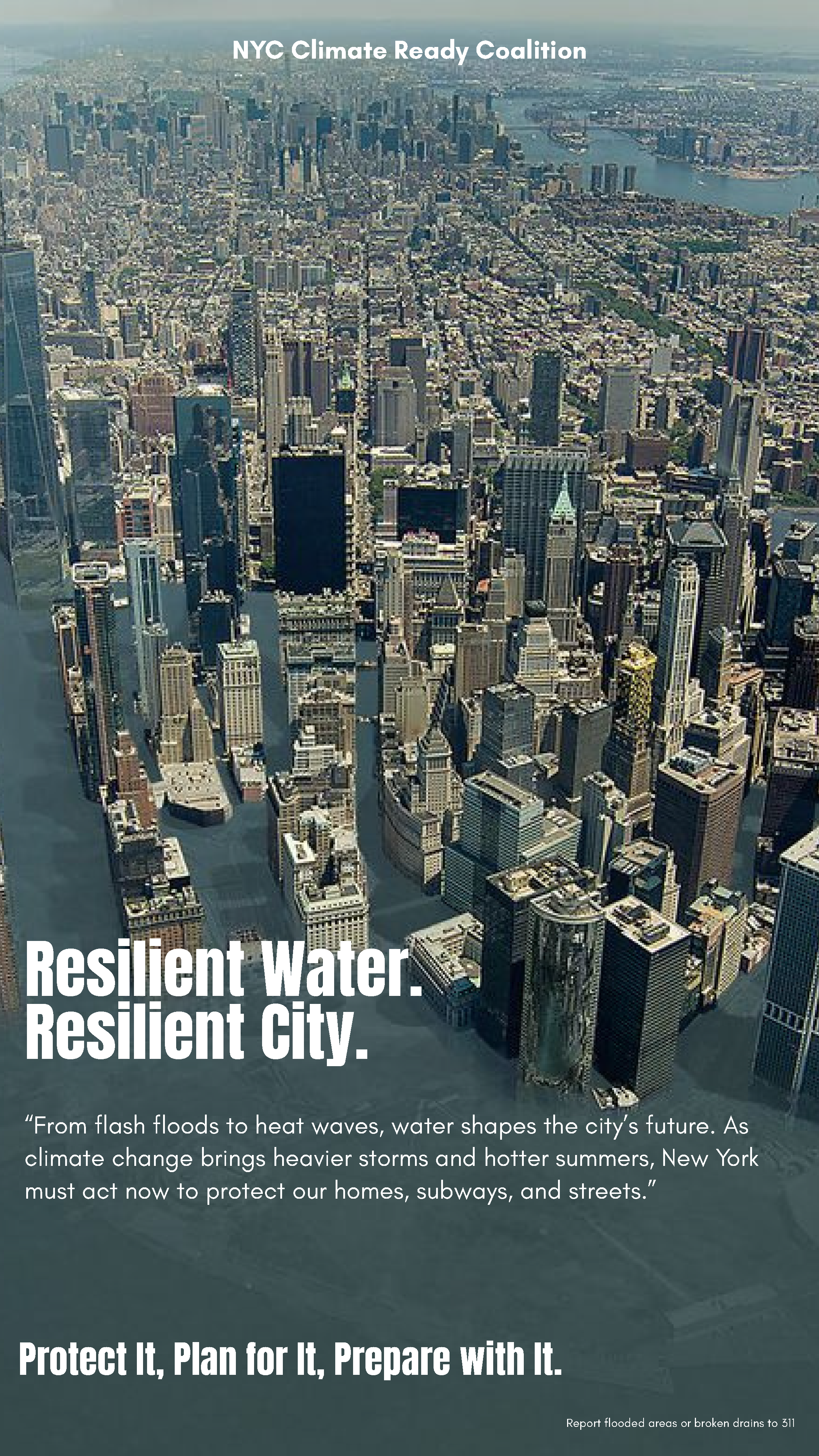
Lily Nelson | Resilient Water. Resilient City: “For my PSA campaign, I chose to frame it around how water plays a powerful and ever-changing role in shaping New York’s future. From flash floods to heat waves, the city’s relationship with water reflects the urgent needs and challenges of climate change. I wanted to highlight how extreme weather events are no longer distant possibilities; they are daily realities that threaten New Yorkers' homes, subways, and streets. This campaign encourages New Yorkers to take action by protecting, planning for, and preparing with water in mind. Titling my PSA 'Resilient Water. Resilient City.' I wanted to spread the community's awareness and resilience. The overall goal being to inspire collective responsibility in building a city that can adapt and thrive in the face of climate uncertainty.”
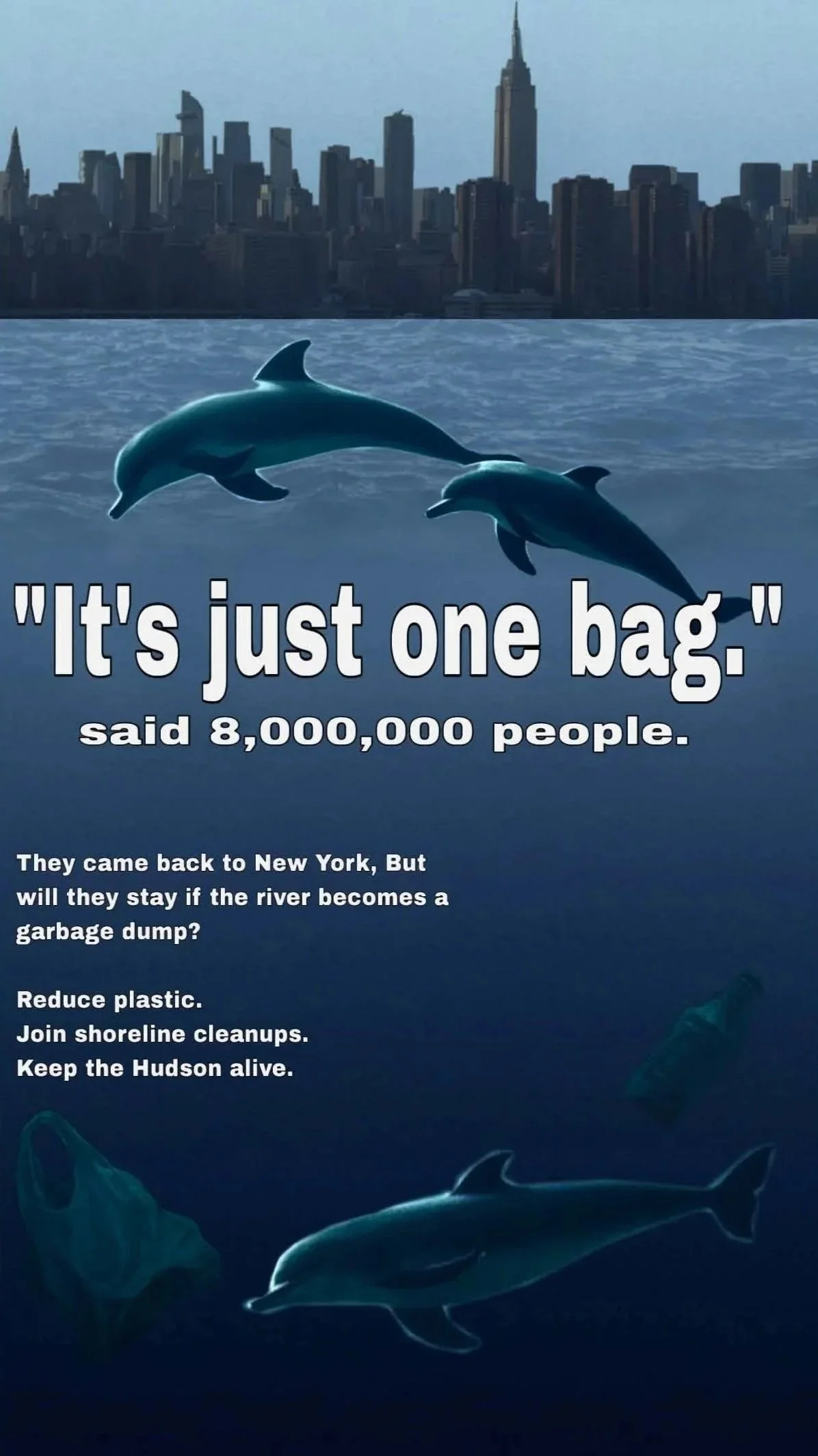
Polina Makarova | “It’s Just One Bag,” said 8,000,000 People: “My PSA addresses the issue of environmental responsibility and collective denial. The phrase “It’s just one bag” represents how individuals often minimize their personal impact on pollution, ignoring the larger consequences of collective behavior. The campaign challenges this mindset by showing that small, seemingly harmless actions - when repeated by millions - create irreversible damage to our ecosystems. The purpose of my PSA is to encourage awareness and accountability. It calls for community participation in protecting New York’s environment through simple but consistent actions, like reducing plastic use and joining local cleanups. The message is not about guilt, but about shared responsibility - a reminder that change begins with one choice, not one excuse.”
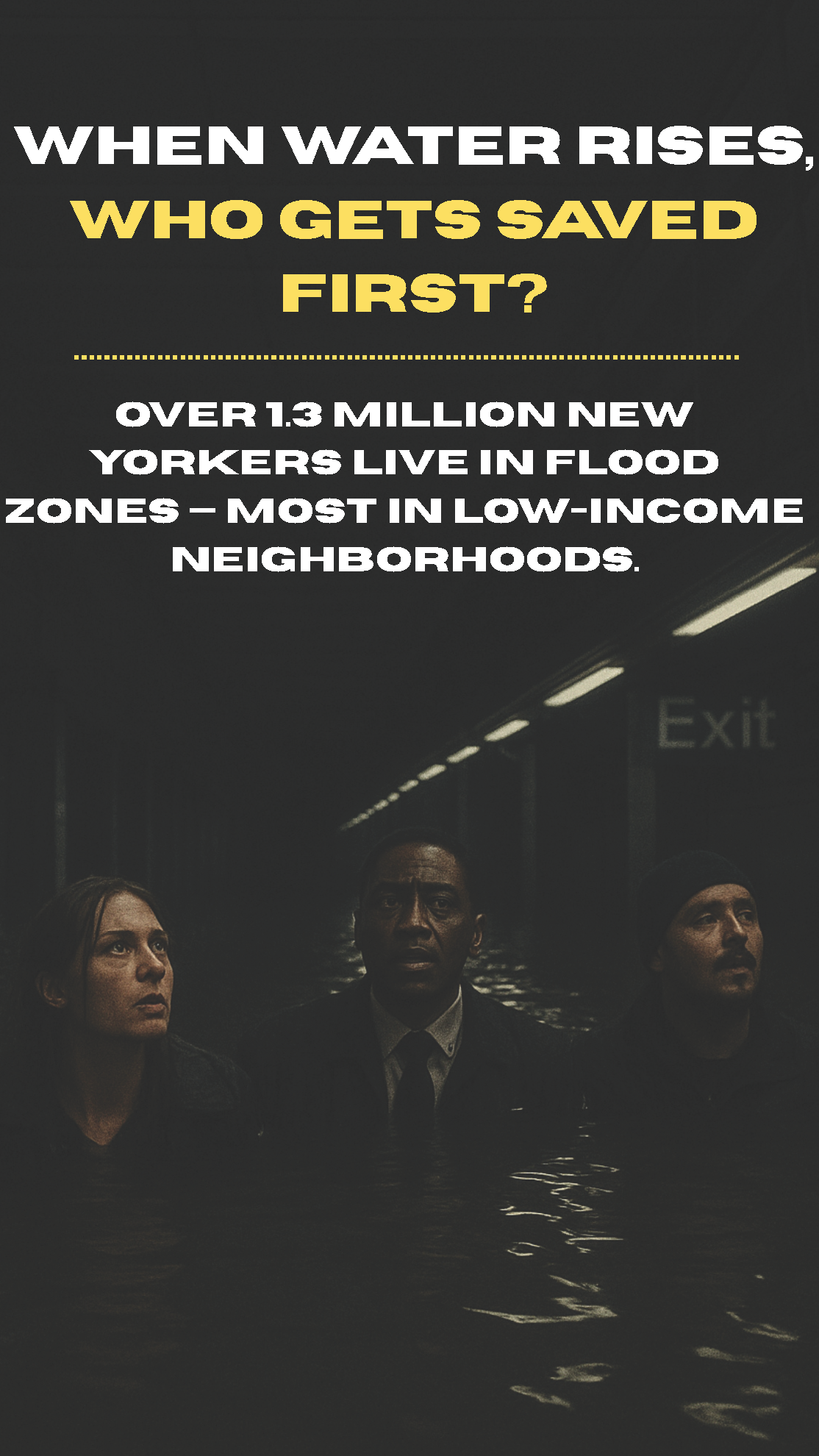
Nia Shields | When Water Rises, Who Gets Saved First?: “This PSA is focuses on immigrants and people of color in this city who are predominantly affected by flooding in their neighborhoods, due to the lack of proper flood protection and infrastructure. Climate disasters do not hit everyone equally. When flooding occurs, it’s public housing, basement apartments, and working class communities that get hit the worse. Just Oct. 30th, during a heavy rain storm that caused flash flooding two men drowned in a lower level basement apartments. In a lot of cases when flooding occurs, it’s up to the community to clear the storm drains to reduce water from rising.”